
Call Button
If you need to lie down or are lacking concentration due to headaches or migraines, Book your appointment today

I Suffer From Hemiplegic Migraine

Hemiplegic Migraine Treatment

Hemiplegic Migraine (HM) has an unusual and often alarming presentation that can mimic stroke, multiple sclerosis, epilepsy or metabolic disorders. Hemiplegia is a condition where one side of the body is weakened or paralysed. Severe hemiplegic migraine attacks may be associated with coma, encephalopathy and other neurological symptoms.

Technically, Hemiplegic migraine is a subcategory of Migraine with Aura. During a hemiplegic migraine attack, sufferers will experience weakness or paralysis of one side of the body, as well as more typical migraine aura symptoms such as visual, sensory, or speech disturbances.

Read more and learn how our treatment is effective in alleviating or dramatically reducing hemiplegic migraine attacks in 85-90% of sufferers.
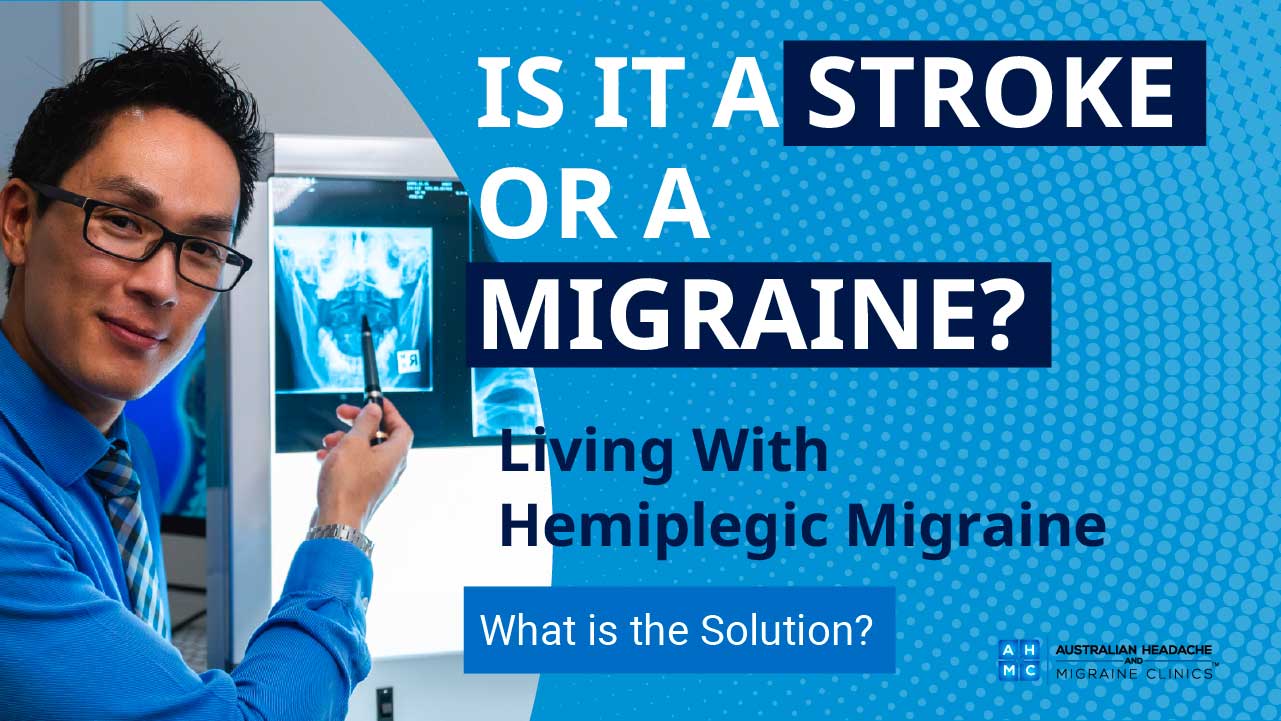

Understanding Your Migraine

Hemiplegic Migraine Symptoms

Symptoms for Hemiplegic Migraine may include:

Severe migraine headache, usually on one side of the body

Weakness or paralysis of one side of the body

Loss of muscle control

Inability to comprehend or formulate language

Numbness or tingling in the face and/or limbs

Dizziness

Drowsiness

Flashing lights in the vision, double vision, or other visual disturbances

As a result of the alarming symptoms that are displayed in HM (Hemiplegic Migraine), diagnoses must exclude all other possible conditions that present similarly. Some examples include severe migraine with aura, multiple sclerosis, metabolic disorders, conversion disorder, facial palsy, stroke or epilepsy. Another characteristic that can differentiate HM from classical migraine with aura is that minor head trauma can trigger HM.

A man experiencing a Migraine

Understanding Your Migraine

What is the cause of Hemiplegic Migraine?

Hemiplegic migraines often have a genetic component. However, they are often triggered by head trauma1, whether it be mild or severe.

In those individuals that may be suffering from Hemiplegic Migraine and have no underlying pathology or disorder that can be recognised, another known cause may be due to a sensitised brainstem2.

A SENSITISED BRAINSTEM will perceive non-threatening stimuli and create pain to be felt where the sensory information was originally detected. This hyperexcitability of the pain sensation is due to the heightened arousal and sensitive brainstem and may be associated with a phenomenon called cortical spreading depression. A sensitive brainstem will relay the sensory information to the brain, but will heighten the sensation so that the brain perceives the information as painful.

About The Assessment Stage

What To Expect During The Assessment


1. Comprehensive and in-depth examination

We instigate an in-depth assessment to identify all possible related factors that could be causing your headaches or migraines. The upper cervical spine, in particular, is thoroughly examined to identify possible issues.


2. Ligamental stability and vertebral arterial tests

We undertake careful examination of neck ligaments and vertebral arteries, ensuring only the highest standards of patient safety and comfort.


3. Temporarily reproduce your headache and migraine symptoms

As a part of the treatment process, we apply gentle and selective stress to the upper cervical spine in order to reproduce headache symptoms, which subside after 20-30 seconds. This helps to identify and treat the cause of your headaches.

Hemiplegic Migraine – Quick Facts & FAQs

What is hemiplegic migraine?

Hemiplegic migraine is a rare form of migraine with aura where the aura includes temporary weakness on one side of the body. Weakness can occur with other aura symptoms such as visual changes, sensory symptoms (pins and needles or numbness), or speech and language changes. By definition, these symptoms are fully reversible, but they can be frightening and disruptive.

Because the symptoms can resemble a stroke, new or first-time weakness should always be assessed urgently.

Familial Hemiplegic Migraine (FHM)

This subcategory of Hemiplegic Migraines refers to a sufferer that has one or more first- or second-degree relatives that suffer from the same condition. There are several genes that have been identified that can contribute to this condition.

Sporadic Hemiplegic Migraine (SHM)

This subcategory of Hemiplegic Migraines refers to a sufferer that does not have any close relatives that suffer from the same condition1. In some cases, similar gene mutations have been found in sufferers of Sporadic Hemiplegic Migraine. This is referred to as “Sporadic Gene Mutation”, hence the name Sporadic Hemiplegic Migraine.

There are no significant differences in the prevalence of the two types of Hemiplegic Migraines. Hemiplegic Migraines often present with brainstem symptoms, in addition to the normal aura symptoms. They are often mistaken for epileptic attacks and unsuccessfully treated as such.

What causes hemiplegic migraine?

Hemiplegic migraine is linked to increased neurological sensitivity and changes in how nerve cells signal. In familial hemiplegic migraine, certain gene variants (including CACNA1A, ATP1A2, and SCN1A) have been identified in some families. In sporadic hemiplegic migraine, people have the same clinical pattern but without a known family history.

Not everyone with hemiplegic migraine will have an identifiable genetic cause, which is why careful clinical assessment matters.

How rare is hemiplegic migraine?

Hemiplegic migraine is very rare. Population-based research has estimated prevalence at around 0.01% (about 1 in 10,000 people), though estimates vary by study and setting.

How to prevent hemiplegic migraine

Prevention is usually about reducing your overall “load” on the nervous system and tightening consistency around triggers. This often includes: regular sleep and meals, hydration, stress management, and tracking patterns in a diary. Some people also require medical prevention options through their GP or neurologist, depending on severity and risk profile.

At Brisbane Headache and Migraine Clinic™, assessment also considers whether upper cervical sensitivity and related neurological irritation may be contributing to the broader migraine pattern.

What foods cause hemiplegic migraine?

There isn’t one universal “hemiplegic migraine food list”. Food triggers are individual and often depend on timing, stress, sleep, and skipped meals. That said, commonly reported migraine-related dietary triggers include alcohol (especially during vulnerable periods), aged cheeses, processed meats (nitrates/nitrites), MSG, and artificial sweeteners.

A simple approach is to track food alongside sleep, stress, and hydration, rather than cutting everything at once.

How Do I Know If I Have a Hemiplegic Migraine?

(Attacks fulfilling criteria A-B)

Migraine features Attacks fulfilling the criteria of Migraine
Aura symptoms Aura consists of both the following:
– Fully reversible motor weakness
– Fully reversible visual, sensory and/or speech/language symptoms

I’ve already tried everything. What else can be done to treat my Hemiplegic Migraine Headaches?

Treating your Hemiplegic Migraine

Over-the-counter painkillers, strong triptan medications, and even tricyclic antidepressants are some of the ways in which Hemiplegic Migraine sufferers have attempted to rid themselves or their children of the painful attacks. In some cases, these ways can alleviate the symptoms of Hemiplegic Migraine. However, despite all of these treatment options, sufferers may still find themselves having painful attacks.

At the Brisbane Headache and Migraine Clinic™, we have seen countless Hemiplegic Migraine sufferers. So, if you suffer from Hemiplegic Migraine, or if you think it sounds like your symptoms, and medication has given you no significant relief, then we believe that you should have a thorough examination of your brainstem. During your initial consultation, your headache clinician should be able to reproduce your hemiplegic migraine pain, by applying pressure in one of the first three vertebrae of your neck.

If your symptoms can be reproduced and resolved, expect a significant improvement to occur rapidly. Our hemiplegic migraine treatment is effective in alleviating or dramatically reducing migraines in 85-90% of sufferers.

Tools for managing migraines.