
Headaches in Shopping Centres Can Start Faster Than You Expect
Why I’m Talking About Headaches in Shopping Centres
My name is Kevin, a clinician based in Brisbane with a focus on headaches, dizziness and complex pain presentations.
One pattern I commonly see is people reporting that their symptoms flare in busy environments. Headaches in shopping centres are a good example because these spaces combine several potential triggers at once.
Understanding what may be contributing to your symptoms can help you manage these environments more confidently rather than simply avoiding them.
Why Do Headaches in Shopping Centres Happen?
Shopping centres place a lot of information in front of your brain at the same time.
For people with migraine, sensitivity to light and sound is common, and bright lights, screen use and loud noises can act as triggers for some people.
If dizziness or visual motion sensitivity is also part of your symptoms, busy environments can be particularly challenging. Your brain continuously combines information from your eyes, your inner-ear balance system and sensors throughout your body to help you understand where you are in space.
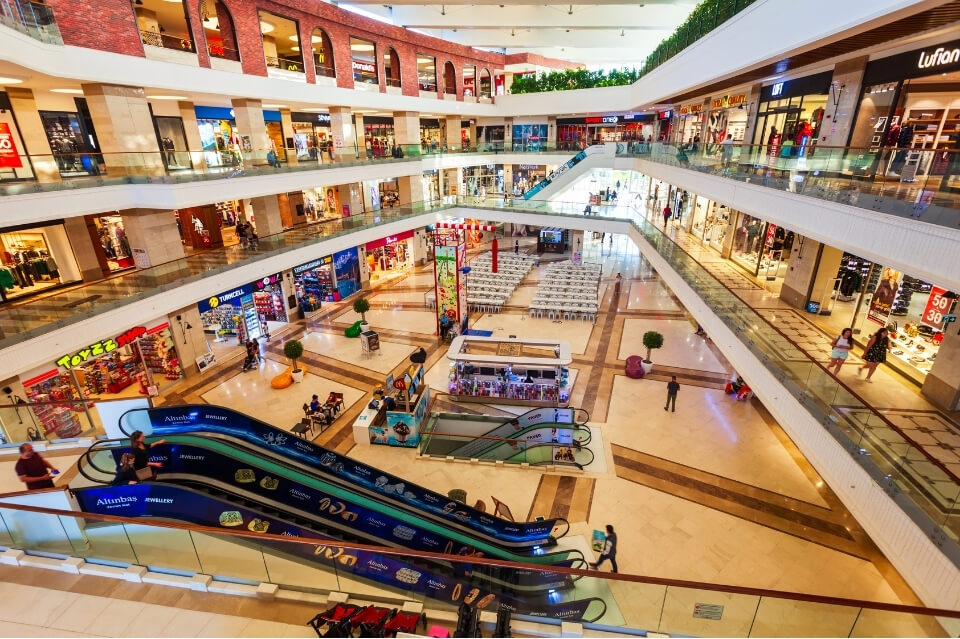
In a shopping centre, that information is constantly changing. Crowds move past you, escalators travel in different directions, displays compete for your attention and your eyes repeatedly shift between near and distant objects.
For some people with vestibular migraine or visual sensitivity, environments such as shopping centres can provoke dizziness and balance symptoms as well as adding to the overall symptom load.
Common Triggers for Headaches in Shopping Centres 
Several factors can contribute to headaches in shopping centres, and more than one may be affecting you at the same time.
Bright and artificial lighting
Strong lighting, glare and flickering lights can be uncomfortable for people who are sensitive to visual input. Bright lights are also a recognised migraine trigger for some people.
Constant visual movement
Crowds, escalators, digital screens and changing displays mean your visual system is continually processing movement. This can be particularly provocative if you experience dizziness or visual motion sensitivity.
Noise and competing sounds
Music, conversations, announcements and sounds echoing through large spaces can make headaches in shopping centres more difficult to tolerate. People with migraine may also experience increased sensitivity to sound during an attack.
The combination of these factors can help explain why headaches in shopping centres sometimes appear quickly even when you felt well before walking inside.
What the Headaches May Be Telling You
Experiencing headaches in shopping centres does not automatically mean there is something structurally wrong or damaged.
For some people, the pattern reflects increased sensitivity to environmental triggers. Migraine, visual motion sensitivity and some dizziness conditions can all make busy environments harder to tolerate.
That does not mean everybody should simply push through their symptoms. It also does not mean every headache in a shopping centre has the same cause.
Understanding your individual pattern matters. Notice whether lighting, noise, visual movement, fatigue, hunger, stress or the length of your visit seems to make symptoms worse. A headache diary can be useful for identifying recurring triggers and patterns. Healthdirect also recommends tracking symptoms and possible triggers when investigating recurring headaches.
How to Manage Headaches in Shopping Centres
If headaches in shopping centres are becoming predictable, a few practical changes may make visits easier.
Start with shorter visits
Rather than staying until symptoms become severe, begin with a manageable amount of time and leave before you become significantly aggravated.
If visual motion sensitivity or dizziness is contributing to your symptoms, gradual exposure may form part of management. The aim is controlled progression rather than forcing yourself through a major flare-up.
Take visual breaks
Give your eyes a break from moving crowds and displays. Looking towards a stable object, sitting somewhere quieter or briefly stepping outside may reduce the amount of visual information you are processing.
Choose quieter times
If possible, visit when the centre is less crowded. Reducing noise and visual movement can make it easier to understand which triggers are most important for your headaches in shopping centres.
When Headaches in Shopping Centres Need Medical Review
Most headaches in shopping centres will not indicate a medical emergency, but a new or significantly different headache pattern should not automatically be blamed on sensory overload.
Seek urgent medical attention for a sudden, severe headache or a headache accompanied by concerning symptoms such as confusion, significant changes in vision, loss of balance, seizure, fever with neck stiffness or other new neurological symptoms. Healthdirect recommends emergency assessment for several of these warning signs.
If your headaches are recurring, becoming more frequent or interfering with normal activities, it is also worth discussing them with an appropriate healthcare professional.
Written by:

References
Doğan, H. et al. (2025) ‘Navigating migraine chronicity: The role of environmental risk factors and triggers’, Frontiers in Neurology, 16. doi:10.3389/fneur.2025.1688987.
Elser, H. et al. (2024) ‘The environment and headache: A narrative review’, Current Environmental Health Reports, 11(2), pp. 184–203. doi:10.1007/s40572-024-00449-4.